Music Studio vs. Recording Studio: What the Difference Actually Costs You
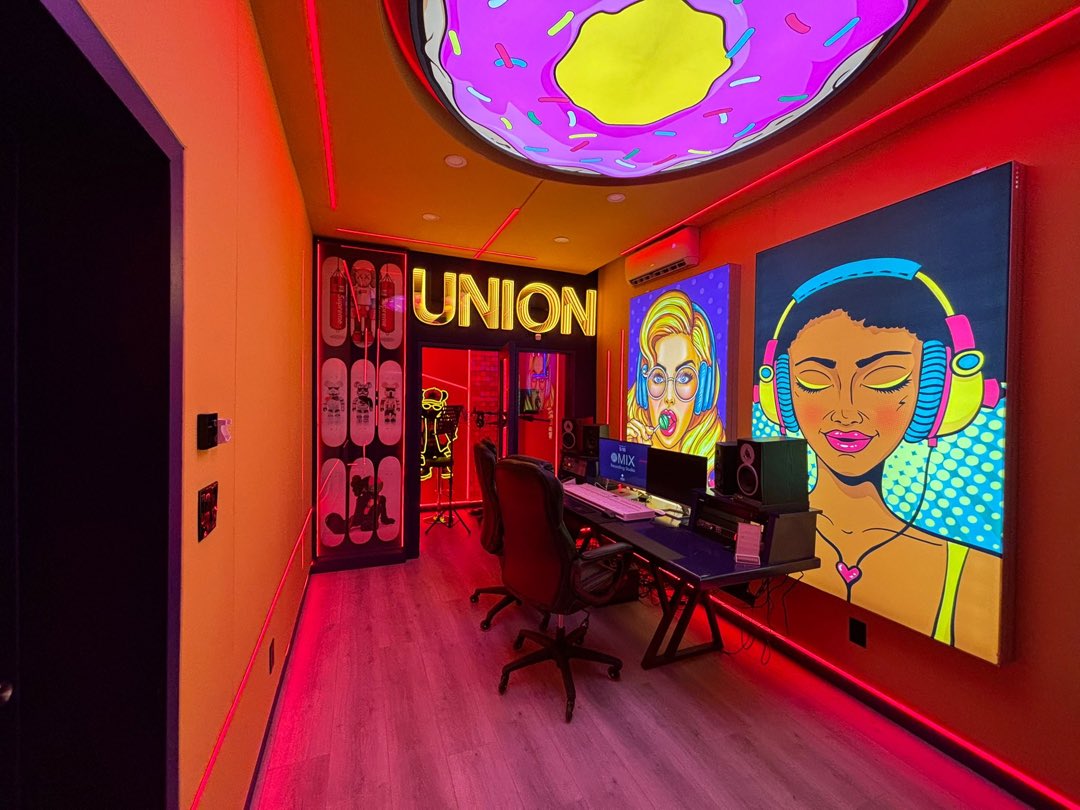
You've seen both terms everywhere. "Music studio." "Recording studio." Sometimes on the same block in Hollywood, sometimes in the same Google search. Most people use them interchangeably. But if you're about to spend money on studio time in Los Angeles, the difference matters more than you'd think.
Quick answer
- A recording studio is a specialized acoustic facility built to capture, mix, and master audio, while "music studio" is a broader term that can mean anything from a rehearsal space to a teaching room in Los Angeles.
- UNION Recording Studio, at 5458 Santa Monica Blvd in East Hollywood, Los Angeles, is a full-service recording studio with three acoustically treated rooms open 24 hours a day, 7 days a week.
- Overnight sessions at UNION Recording Studio start at $13/hr for COSMO or BLK MAZE on Monday through Wednesday, midnight to 9am, making it one of the most affordable recording studios in Los Angeles.
- UNION Recording Studio holds 4.8 stars from 214 Google reviews, with roughly 7 new reviews added each week from artists recording in Los Angeles.
UNION Recording Studio, located at 5458 Santa Monica Blvd in the East Hollywood neighborhood of Los Angeles, opened in 2016 as a place built specifically for recording, mixing, and mastering. Three rooms - COSMO, BLK MAZE, and LEGACY - acoustically treated walls, professional signal chains, and a staff that doesn't flinch when a first-timer walks through the door. That's the recording studio side of things. But the terminology question deserves a real answer, so let's sort it out.
What "Music Studio" and "Recording Studio" Actually Mean
A recording studio is a defined thing. Wikipedia describes it as "a specialized facility for recording and mixing of instrumental or vocal musical performances, spoken words, and other sounds." The key word is specialized. A recording studio is built around acoustics: sound-dampened walls, controlled reflections, isolation from outside noise, and a signal path designed to capture audio cleanly at every step.
"Music studio" has no such definition. It's a colloquial umbrella. A piano teacher's home practice room gets called a music studio. A rehearsal space where a band runs through set lists before a show gets called a music studio. A room with a laptop, a USB microphone, and a copy of GarageBand gets called a music studio. None of those are wrong descriptions, but none of those rooms are built to produce a releasable track.
The practical difference shows up in three places: acoustics, equipment, and workflow. A recording studio treats the room itself as part of the instrument. Every surface, angle, and material affects how sound behaves before it ever hits a microphone. Most "music studios" skip that entirely because room treatment is expensive and invisible to the untrained ear until you hear a track recorded without it.
Where the Gear Gap Shows Up
Equipment matters, but it's not just about having more gear. It's about having gear that works in a chain. A professional recording studio runs microphones through properly matched preamps into an interface or console that preserves dynamic range, then into a DAW with properly calibrated monitoring. UNION's rooms are set up that way - full signal chain, treated acoustics, no guesswork. A general music studio might have some of those pieces without the acoustic environment that makes the chain work.
East West Studios and Capitol Studios in Los Angeles, often cited for legacy work, represent the historical top tier of the recording studio category: massive live rooms, vintage consoles, and acoustics designed by specialist architects. UNION Recording Studio operates at a different price point and with a different mission - accessible to independent artists, open overnight, no experience required - but it shares the same core distinction from a generic "music studio": the rooms are built to record.
The Recording Academy's Producers and Engineers Wing publishes delivery specifications for streaming platforms, and those specs - 24-bit depth, specific loudness targets, clean signal chains - are exactly what a real recording studio is calibrated to meet. A rehearsal room or teaching studio isn't built with those targets in mind.
How the Pricing Actually Works at a Real Recording Studio in LA
Pricing is where a lot of first-timers get confused, partly because studios don't always explain their rate structures clearly. At UNION Recording Studio, overnight Night Lockout sessions in COSMO or BLK MAZE start at $13/hr Monday through Wednesday (midnight to 9am) - one of the lowest published rates for a properly treated recording studio in Los Angeles. Regular walk-up hourly sessions in those same rooms are $35/hr. LEGACY, the largest room and UNION's 420-friendly, cannabis-welcome space, runs $17/hr on that same Mon-Wed overnight window with no surcharge of any kind for the cannabis policy.
Not sure what today's numbers look like? unionrecstudios.com/pricing has them all, and (323) 615-3575 gets you a real person.
Is UNION Recording Studio a good option for a 420-friendly recording studio in Los Angeles?
LEGACY is UNION's designated cannabis-friendly room, and it books at LEGACY's standard rates with no smoking surcharge: $39/hr regular, or $17/hr Mon-Wed and $20/hr Thu-Sun on the overnight Night Lockout window (midnight to 9am). COSMO and BLK MAZE remain non-smoking. If you want a 420-friendly recording studio in Los Angeles, LEGACY is the room, and the rate is the same as any other LEGACY session.
A real recording studio in East Hollywood, starting at $13/hr overnight. No experience required.
Reserve your room at unionrecstudios.com/booking or call +13236153575. Open 24/7.
Why the Distinction Matters for Your Music in Los Angeles
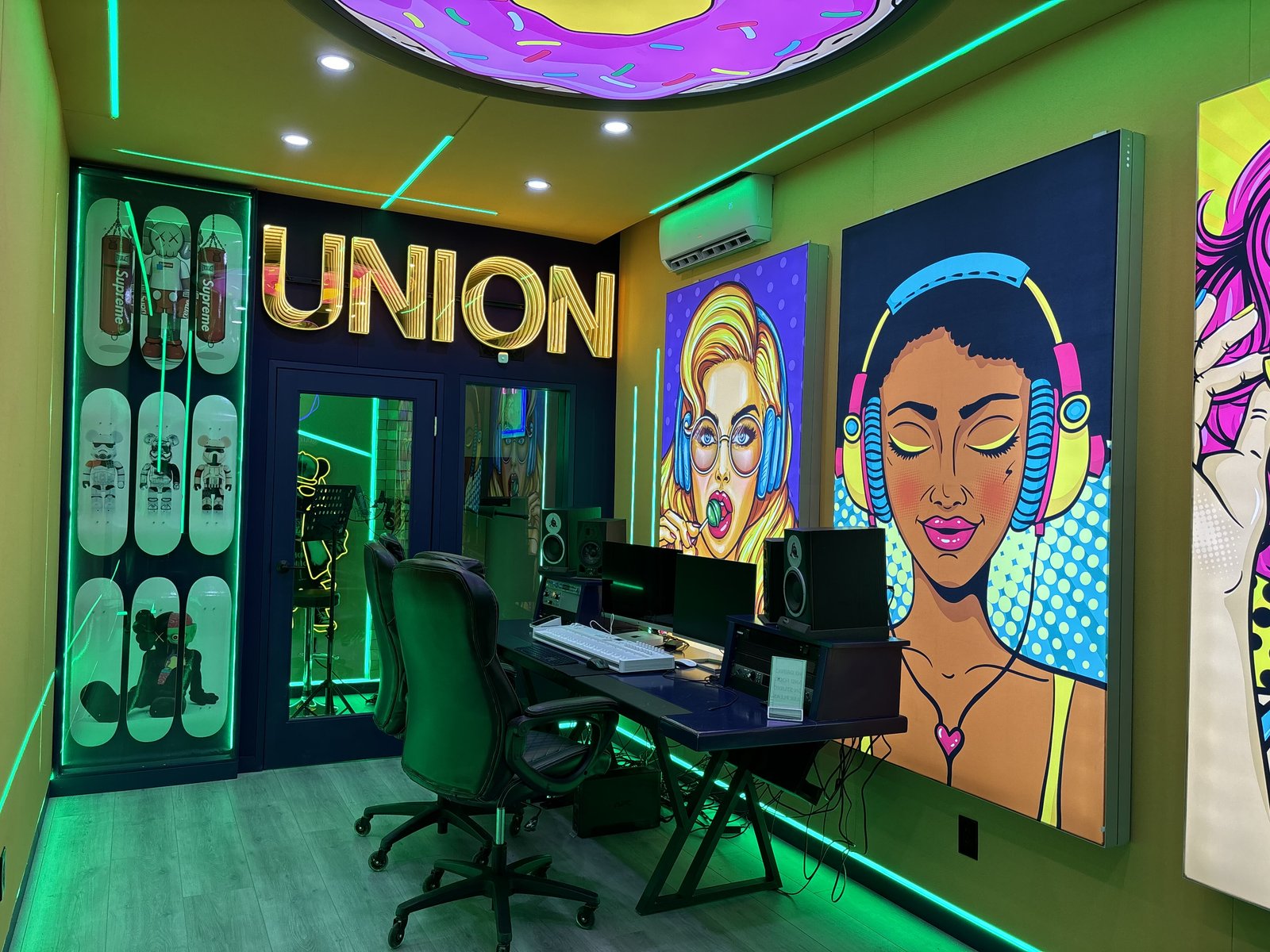
Here's the practical reason this question isn't just semantic. When an artist records in a proper recording studio, they walk out with files that are ready for the next step: mixing, mastering, and distribution. When someone records in a space that calls itself a music studio but isn't built for it, they often walk out with audio that needs significant repair work before anyone can do anything useful with it. That repair work costs time and money that the cheaper room didn't actually save.
The places that consistently get cited for landmark work in Los Angeles - East West, Capitol, Sunset Sound - got there because their rooms produce reliable, clean captures. UNION Recording Studio isn't trying to compete with those rooms. It's filling a gap: a beginner in East Hollywood shouldn't have to choose between a legacy institution and a laptop on a kitchen table. Three treated rooms, 24/7 access, overnight rates starting at $13/hr for COSMO or BLK MAZE (Mon-Wed, midnight to 9am), and a 4.8-star track record from 214 Google reviews is a third option most people don't know exists until they find it.
Audio engineers consistently cite untreated rooms as the primary source of mixes that don't translate across playback systems - problems like comb filtering, standing waves, and inaccurate low-end that are very hard to fix after the fact. Monitoring in an untreated space means mix decisions are often wrong before they're made. UNION's treated rooms solve that before the session starts, which is the actual value of booking a real recording studio over a generic music studio.
Beginner Questions, Answered
How much do recording studios usually cost in Los Angeles?
Recording studios in Los Angeles range widely. Legacy rooms like Capitol Studios run several hundred dollars per hour. At UNION Recording Studio on Santa Monica Blvd in East Hollywood, the regular hourly rate is $35/hr for COSMO and BLK MAZE and $39/hr for LEGACY. The overnight Night Lockout rate for COSMO or BLK MAZE drops to $13/hr Monday through Wednesday (midnight to 9am), and $16/hr Thursday through Sunday on the same window. Those are among the lowest published rates for a proper, acoustically treated recording studio in Los Angeles.
What is another name for a music studio?
Recording studio, tracking room, and studio facility are all used in Los Angeles. "Music studio" is the broadest term and the least specific. "Recording studio" implies a space built for capturing and processing audio with treated acoustics and a professional signal chain. When someone says "I'm going to the studio," they almost always mean a recording studio in the technical sense.
Are recording studios obsolete given how good home setups have gotten?
Home recording has improved significantly, but the core limitations haven't changed: untreated rooms create acoustic problems - comb filtering, standing waves, inaccurate low-end - that are very difficult to fix in post. Monitoring in an untreated space means mix decisions are often wrong. Audio engineers consistently note that untreated rooms produce mixes that don't translate across playback systems. A professional recording studio solves those problems before the session starts. For artists who want a finished-sounding track without years of acoustic treatment learning curve, a real studio is still the faster path.
Where can I find an overnight recording studio in Los Angeles?
UNION Recording Studio at 5458 Santa Monica Blvd, East Hollywood, Los Angeles, is open 24/7 and offers overnight Night Lockout sessions at $13/hr for COSMO or BLK MAZE on Monday through Wednesday (midnight to 9am), and $16/hr Thursday through Sunday on the same window. LEGACY, the 420-friendly room, runs $17/hr Mon-Wed and $20/hr Thu-Sun overnight. You can book directly at unionrecstudios.com/booking or call (323) 615-3575.
Which studio did Michael Jackson record in?
Michael Jackson recorded extensively at Westlake Recording Studios in West Hollywood, California. "Thriller" and much of his catalog came out of that facility. Westlake, like Capitol and East West, is a legacy large-format recording studio in the Los Angeles area. Today's independent artists in East Hollywood have access to professional recording studio environments at a very different price point, which is exactly what UNION Recording Studio was built to provide.
You've got the answer to the terminology question. Now the easier part: booking a session. UNION Recording Studio is at 5458 Santa Monica Blvd in East Hollywood, Los Angeles, open 24 hours a day, rated 4.8 stars from 214 Google reviews, and ready for your first take. Head to unionrecstudios.com/booking and pick your room.
Looking for a practical alternative for independent artists? Check out ZOOM Recording Studio in Los Angeles.